glazing.
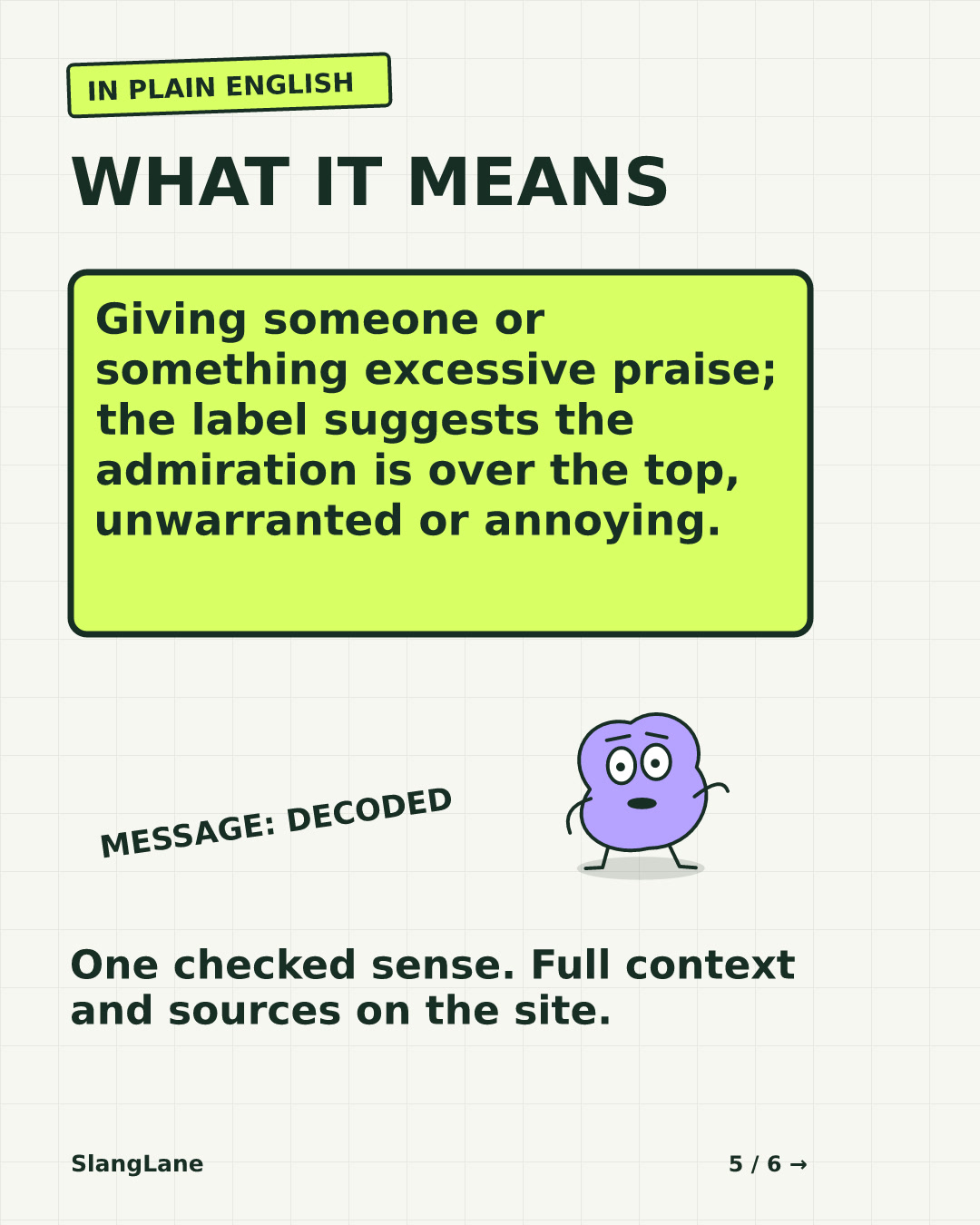
Giving someone or something excessive praise; the label suggests the admiration is over the top, unwarranted or annoying.
The joke.
Then the context.
One compliment and they opened a fan museum.
Giving someone or something excessive praise; the label suggests the admiration is over the top, unwarranted or annoying.
Swipe the carousel · 6 slides
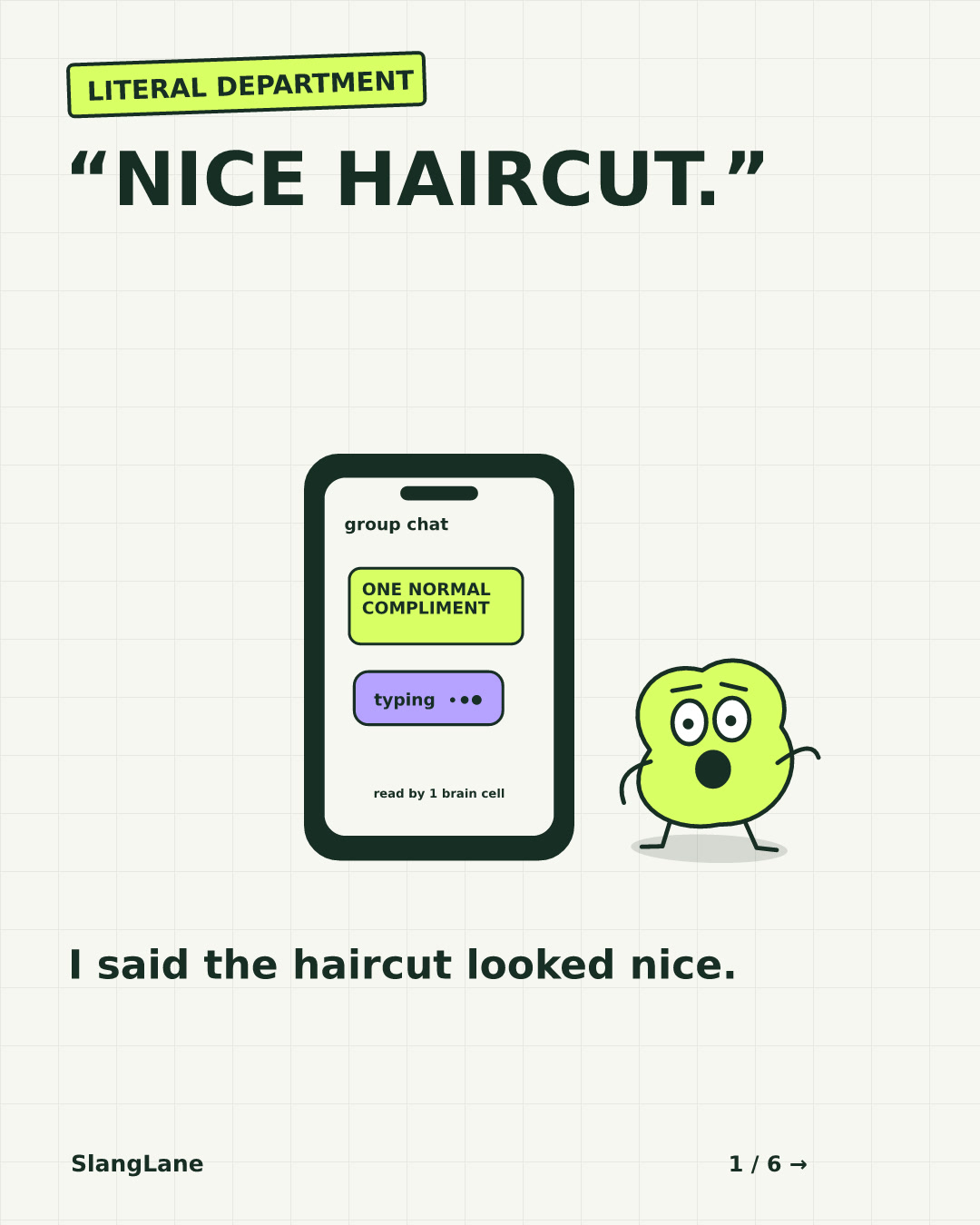
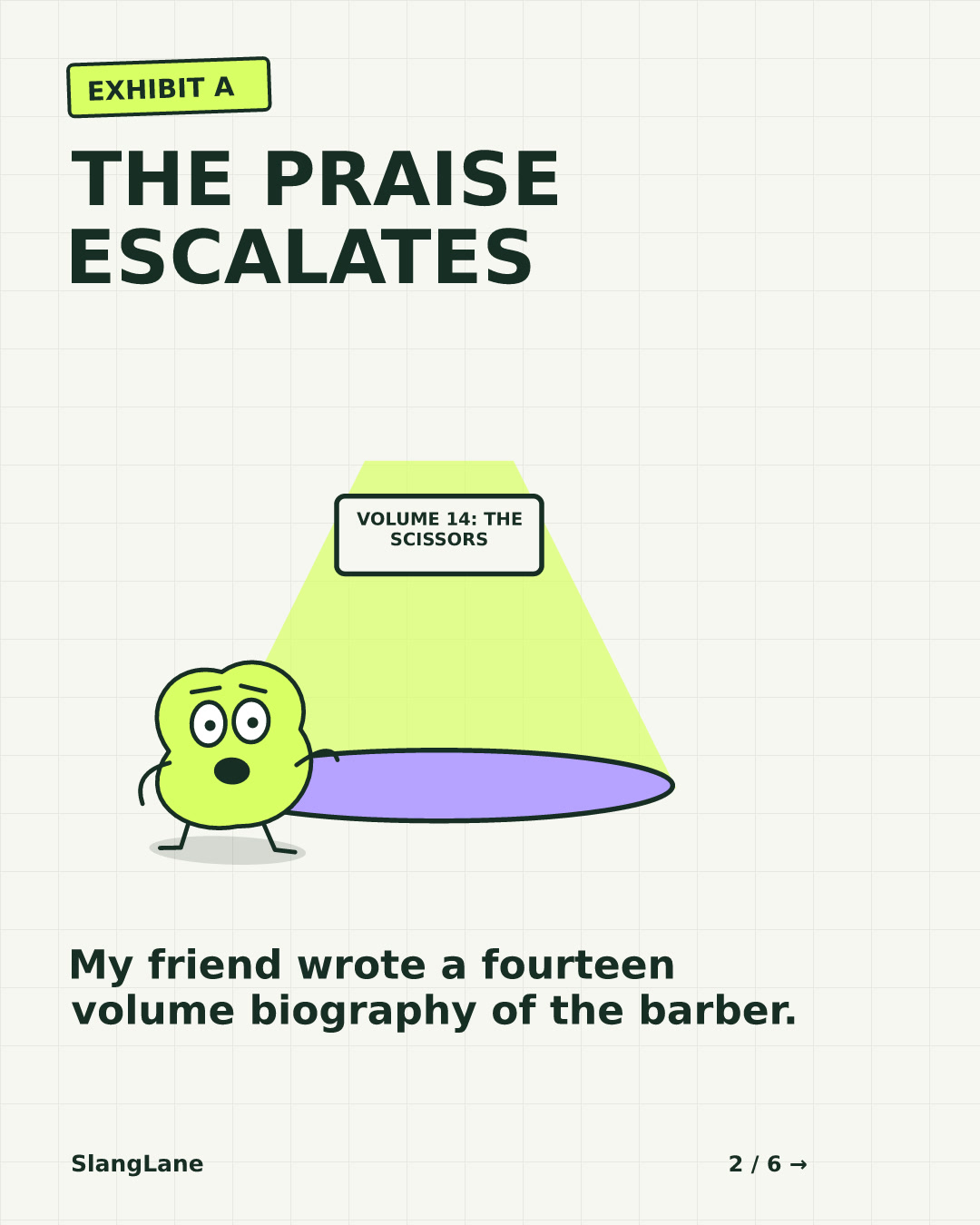
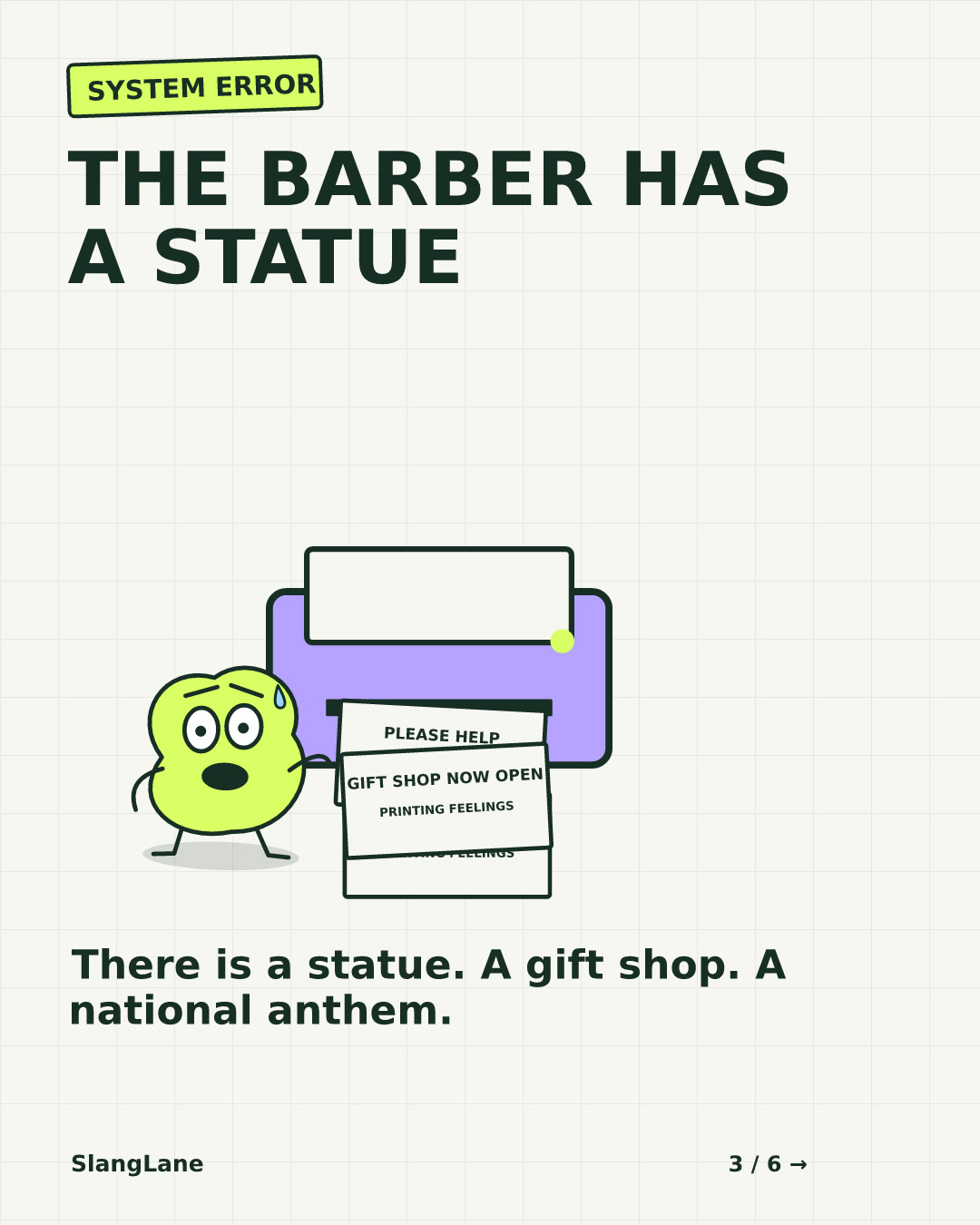
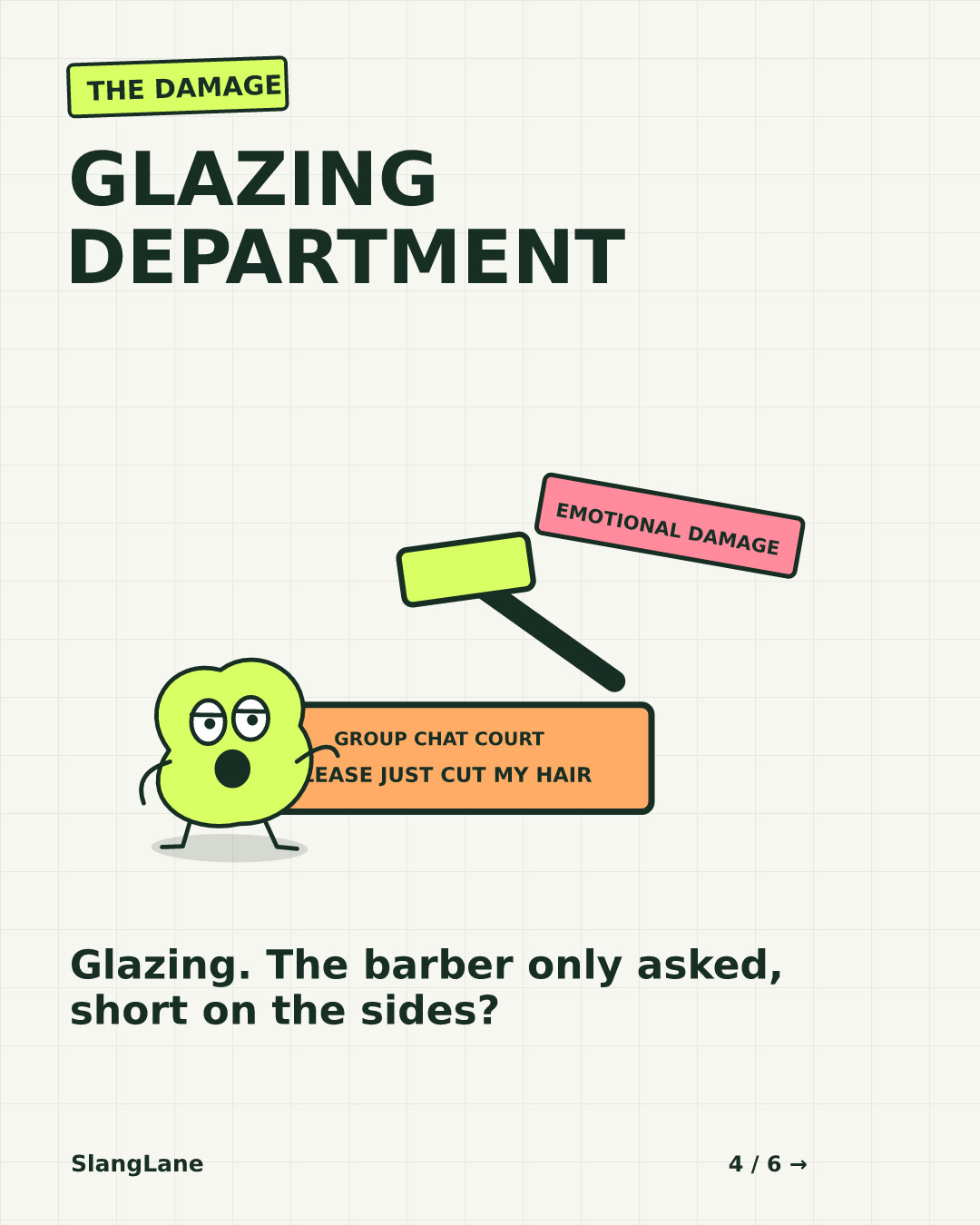
Original fictional sketch · synthetic voices · meaning from this published entry.
What does glazing mean?
Glazing means showering a person or thing with excessive praise. A speaker saying “stop glazing” thinks the admiration has gone too far. The verb is glaze, and glaze or glazing can also name the act of overpraising.
The criticism is a judgment about the amount or quality of praise. It does not prove that the thing being praised is bad or that the admirer is dishonest. Someone can also use the term self-mockingly while openly enjoying a favourite performance, player or work.
How does “glazing” sound when someone sends it to you?
Tap a reaction above to compare your reading with other visitors, or test a full message below:
See how it lands.
Original examples written for this entry, not quotations from the sources.
You called every scene perfect; the glazing is getting ridiculous.
I know I am glazing, but I loved that performance.
The right word.
The right moment.
Recognize the complaint about excess. If you are giving criticism, point to the actual claim rather than treating any enthusiasm as automatically unreasonable.
Avoid assuming that every compliment is excessive or that calling something glazing disproves the opinion being expressed. The label is not an argument by itself.
Not quite the same as…
simp
Simp can emphasize excessive personal devotion or deference. Glazing specifically emphasizes excessive praise and can target admiration for things as well as people.
A little backstory.
The linked reference documents this meaning. This entry does not establish a single inventor or a first-use date; a dictionary record and a current popularity measurement answer different questions.
Supported by Merriam-Webster
Still wondering?
Does glazing mean ordinary praise?
The slang adds a judgment of excess. A straightforward compliment is not automatically glazing simply because another person dislikes it.
Can people say it about themselves?
Yes. A speaker can acknowledge exaggerated praise self-mockingly while remaining sincere about enjoying the thing they are praising.
Sources & checks
Meaning and factual notes are informed by the references below. Examples and usage advice are original editorial writing. A source documents use; it does not measure current popularity.
- glazing — meaning and usage ↗Merriam-Webster · checked 20 Oct 2026Supports: meaning; distinct senses
When should you avoid saying “glazing”?
Avoid assuming that every compliment is excessive or that calling something glazing disproves the opinion being expressed. The label is not an argument by itself.
Never use “glazing” in client emails, executive Slack channels, or HR-visible threads. Translate into standard English: “Your excessive praise for every scene is getting ridiculous.”.
Works as playful banter once rapport exists, but a bare one-word reply with “glazing.” (especially with a period) reads as dry or dismissive.
Register: Disapproving or self-mocking praise label. Avoid assuming that every compliment is excessive or that calling something glazing disproves the opinion being expressed. The label is not an argument by itself. Over-explaining “glazing” or putting it in quotation marks immediately signals out-of-group / Millennial-or-Boomer register switching.
Used primarily across Online English; tone relies heavily on surrounding punctuation and thread velocity.
Casual text without period (“glazing”): 18% tension · Clipped reply with a trailing period (“glazing.”): 66% passive-aggressive signal. Read full tone & subtext guide ↗
How “glazing” changes meaning by context & how to reply
Classic dictionaries list a definition; real conversations depend on register switching. Use this 3-column pragmatic matrix to decode the subtext and reply without sounding dry:
| Context & Message | Hidden Pragmatic Subtext | How to Reply (Copy-Ready) |
|---|---|---|
Casual Group Chat / Banter“You called every scene perfect; the glazing is getting ridiculous.” |
Your excessive praise for every scene is getting ridiculous. (Disapproving or self-mocking praise label, sincere or playfully exaggerated) | “No cap, that’s 100% valid — let’s lock it in 🫡” Register: Match energy (Casual / Warm) |
Short / Potentially Dry Text (With a Period)“glazing.” |
Abrupt punctuation strips warmth; may signal low energy, mild annoyance, or sarcastic compliance. | “Wait — good “glazing” or stressed “glazing”? Just checking the vibe.” Register: Disarming & Clarifying |
Dating App / Early Texting Thread“I know I am glazing, but I loved that performance.” |
I know I am praising it excessively, but I loved that performance. | “Careful, that sounds dangerously close to a side quest I’d actually say yes to.” Register: Playful / Non-Dry Banter |
Workplace Slack / Client Translation“You called every scene perfect; the glazing is getting ridiculous.” |
Needs code-switching into professional register before forwarding to stakeholders. | “Your excessive praise for every scene is getting ridiculous.” Register: 100% HR-Safe Standard English |
“Your excessive praise for every scene is getting ridiculous.”
“Honestly, your excessive praise for every scene is getting ridiculous. — proper sorted, no drama.”
Is “glazing” safe for school or work — and how do you reply?
General-audience informal vocabulary (SFW): “glazing” is a general-audience expression (Disapproving or self-mocking praise label) included in our 100% SFW ESL Classroom Kit. It fits casual group chats and informal conversation, but should be translated into standard English in formal client or academic writing (translate with the Corporate ↔ Gen Z tool ↗).
How to reply when someone uses “glazing” in a chat: Match the speaker’s register (Disapproving or self-mocking praise label). If they are joking or exaggerating, a brief acknowledgment (such as bet, no cap, or grand) fits; if the message is in a professional channel, reply in plain English: “Your excessive praise for every scene is getting ridiculous.”.
Embed “glazing” on your site, blog, or course
Copy this one-line snippet to embed a live SlangLane definition card for glazing (or stamp a Court / HR Exhibit card ↗):
<script src="https://slanglane.com/embed/glazing.js" async></script>
Iframe version for Moodle / Canvas / Notion: <iframe src="https://slanglane.com/embed/glazing" width="100%" height="200" style="border:0;max-width:480px" loading="lazy"></iframe>
Compare usage: glazing vs. simp ↗ · glazing vs. goated ↗ · glazing vs. mid ↗
Academic & press citation
SlangLane Editorial & Linguistics Lab. (2026). “glazing” — SlangLane Open Reference Corpus (Release daily-2026-11-22). CERN Zenodo. https://doi.org/10.5281/zenodo.23541347 · Canonical URL: https://slanglane.com/terms/glazing · All PDF working papers ↗